Learning
Teaching shaped around children growing up abroad
Teaching at Azbukarche is shaped around one important reality: for our pupils, Bulgarian is not the language they use every day at school or with their friends.
That is why we work purposefully on reading, writing, grammar, speech and comprehension, building on what each child knows step by step, according to their age and level.
Lessons follow the programmes of the Bulgarian Ministry of Education and Science for Bulgarian Sunday schools abroad, but in class we draw on varied tasks, conversation, reading, practical exercises and projects that help children use what they have learnt rather than simply memorise it.
- Lessons
- Every Saturday
- Year groups
- Preparatory – XII
- School year
- 2026/2027
Core subjects
Bulgarian language and literature
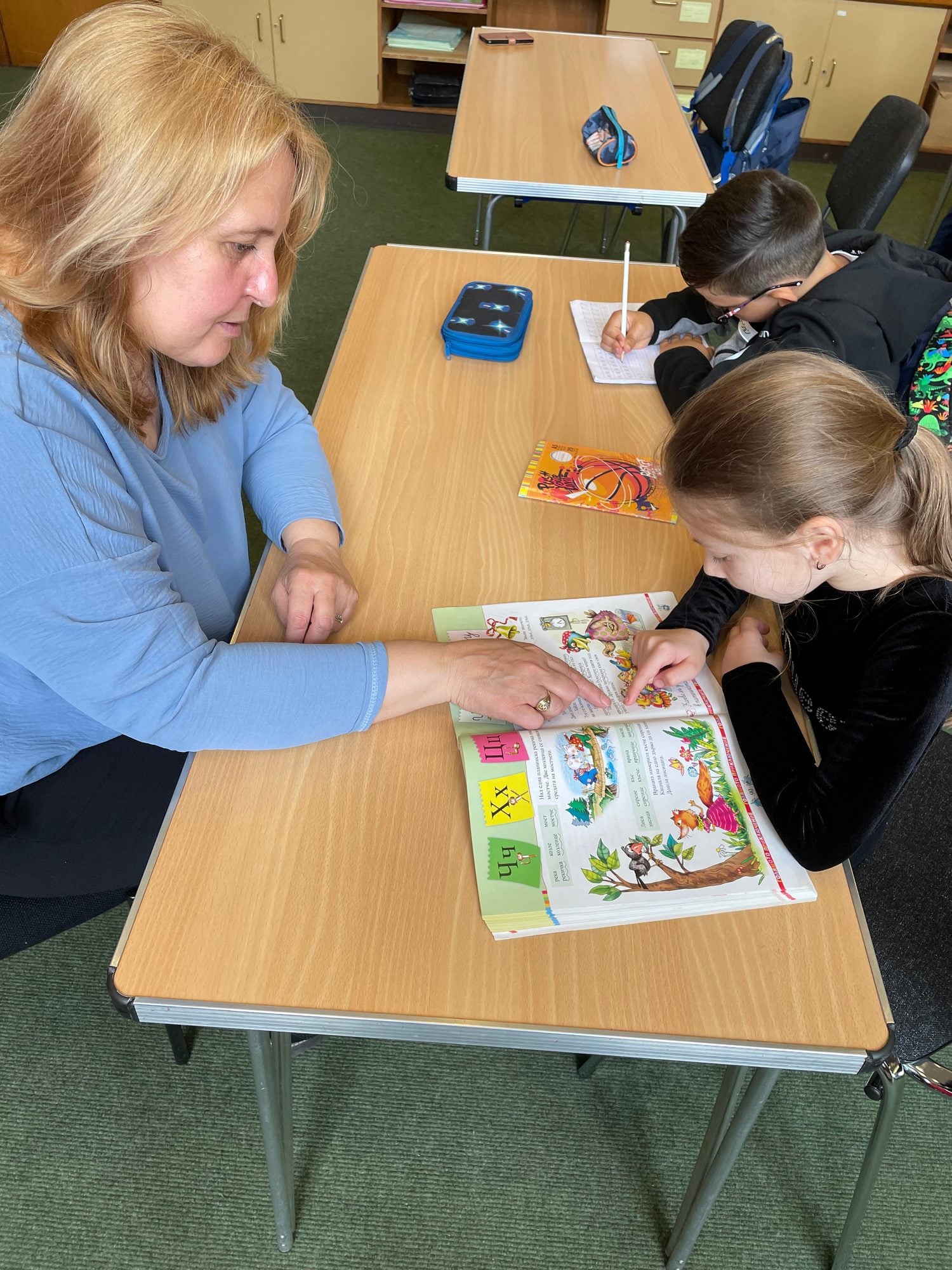
Bulgarian language and literature sit at the heart of everything we do at Azbukarche. Depending on the age of the pupils, lessons develop different sides of their language ability.
Bulgarian language – grammar and written accuracy
In these lessons pupils deepen their grasp of grammar, spelling and punctuation, and learn to use Bulgarian correctly in both writing and speech.
We build a secure foundation step by step, together with the confidence to write independently.
Bulgarian language – speech development and communication skills
For children growing up outside Bulgaria, the chance to use Bulgarian in everyday conversation is often limited. We therefore give particular attention to speaking and to using the language actively.
Through conversation, retelling, description, discussion and practical tasks, pupils widen their vocabulary and develop the ability to express thoughts, feelings and opinions freely and confidently in Bulgarian.
Literature and reading literacy
Reading is far more than pronouncing words correctly.
In literature lessons we work on reading literacy — a child's ability to understand what they have read, to find the key information, to look closely at characters and events, to draw conclusions and to express an opinion of their own.
Through works of Bulgarian literature, children develop their language and, at the same time, come into contact with Bulgarian culture, history and values.
Learning stage by stage
From the first letters to confident command of Bulgarian
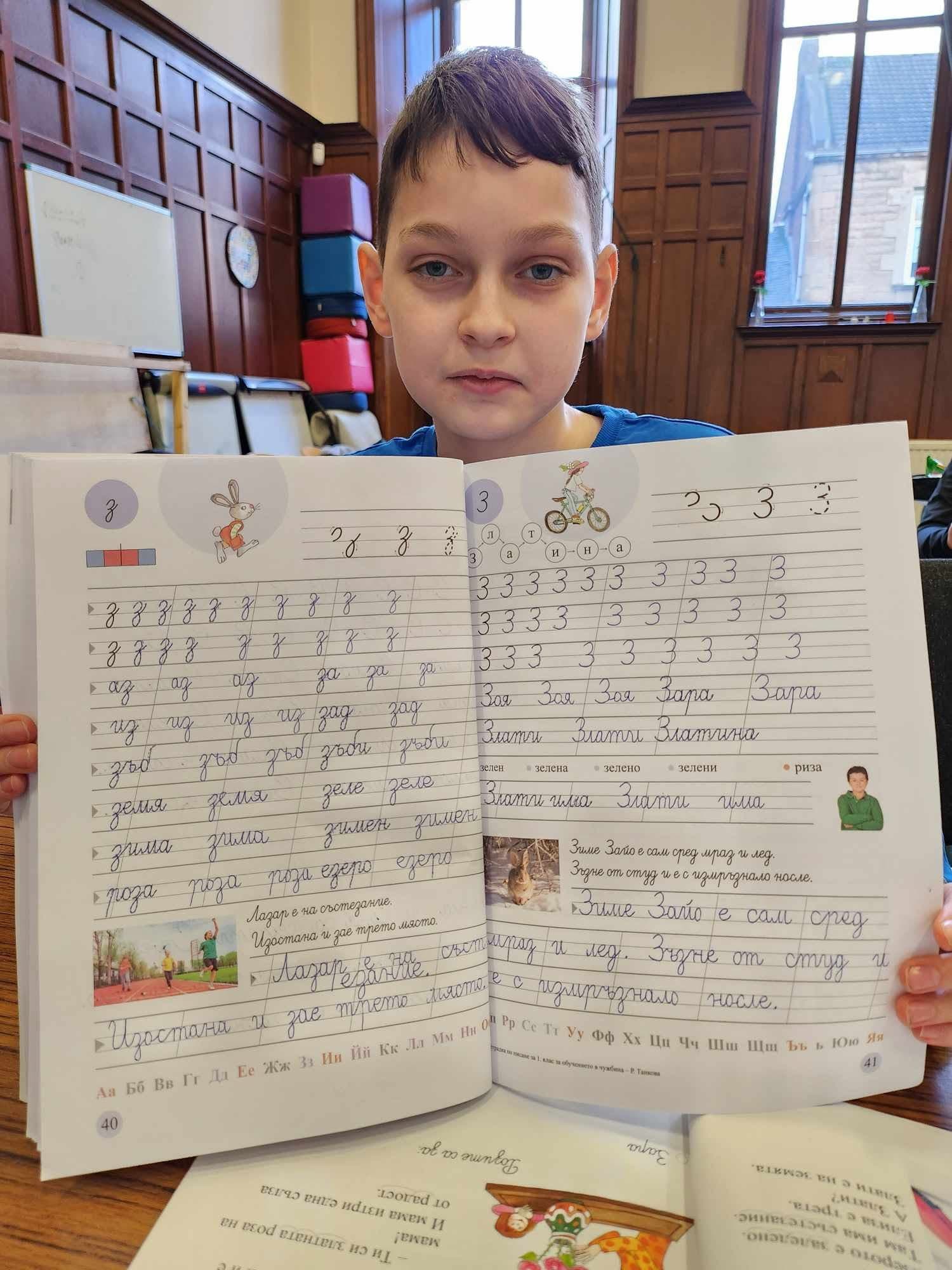
Teaching at Azbukarche covers children from the preparatory group through to grade XII, building knowledge step by step according to each pupil’s age, language level and stage of learning.
With the youngest children we lay the foundations through spoken communication, games, sounds and letters, and first steps in reading and writing. As they progress, we gradually widen their vocabulary and develop reading comprehension, correct writing, grammar and free expression.
With older pupils the work becomes more searching — children analyse texts and works of literature, develop their written and spoken language, and learn to express their own thoughts and opinions with reasoned argument.
Whatever the age, our aim is the same: for every child to progress from their own starting point and to use Bulgarian ever more freely, correctly and confidently.
History and geography
Knowing Bulgaria — its past, its land, its heritage
In the older year groups, pupils study the history and geography of Bulgaria, gradually building a fuller picture of the country and how it has developed.
In these lessons they learn about important figures and events in Bulgarian history, and about the country’s natural and geographical features — its regions, cities and landmarks.
Our aim is not for children simply to memorise facts, but to understand how the past connects with the present, and to come to know Bulgaria as a country with a rich history, culture and heritage.
In-person learning
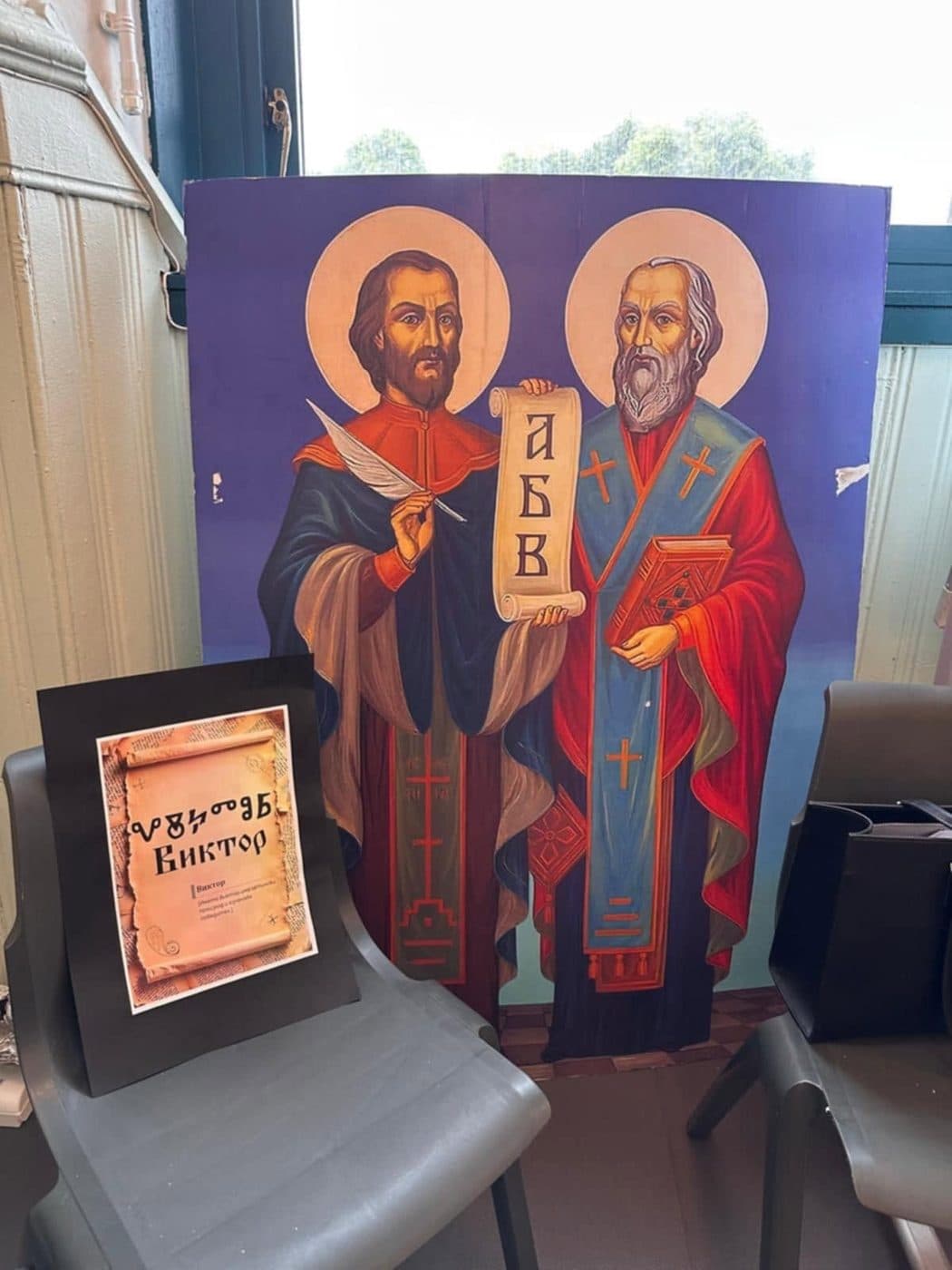
Learning together in Glasgow, every Saturday
Azbukarche’s in-person lessons take place every Saturday at Kinning Park Complex, Glasgow, in a calm environment well suited to learning.
Pupils are grouped by age and year group, and the programme includes Bulgarian language and literature, the history and geography of Bulgaria for the relevant year groups, and the extracurricular activities each child has chosen.
The school day combines different kinds of work — teaching, reading, conversation, practical tasks, creative activities and group work. That way children not only take in new knowledge, but also use Bulgarian naturally with one another.
Timetable
The timetable by year group for 2026/2027
Below you can browse the Saturday timetable for each age group and year group.
The programme includes the lessons in Bulgarian language and literature, the history and geography of Bulgaria for the relevant year groups, and the optional extracurricular activities.
Select a year group to see its full timetable at a larger size.
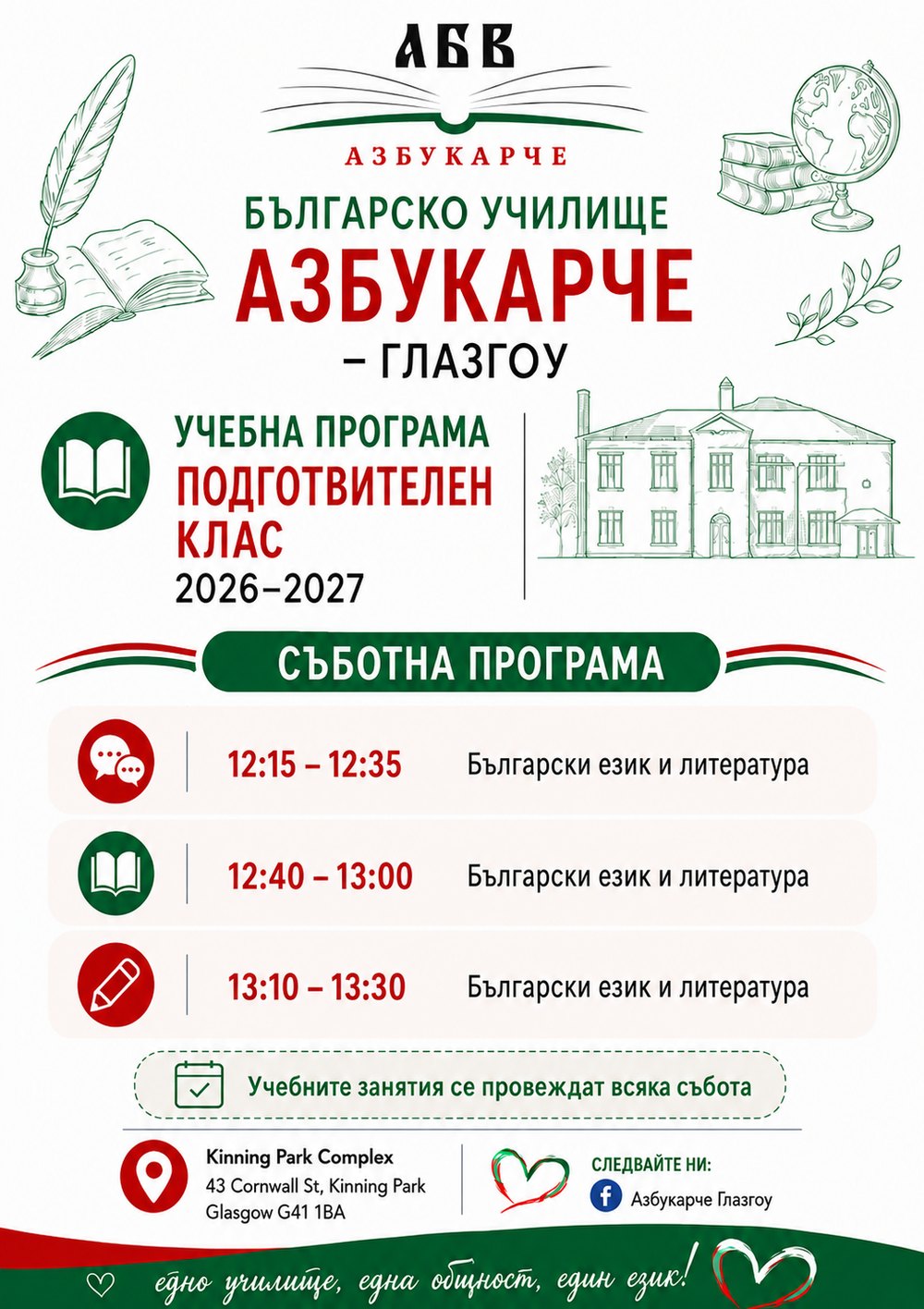
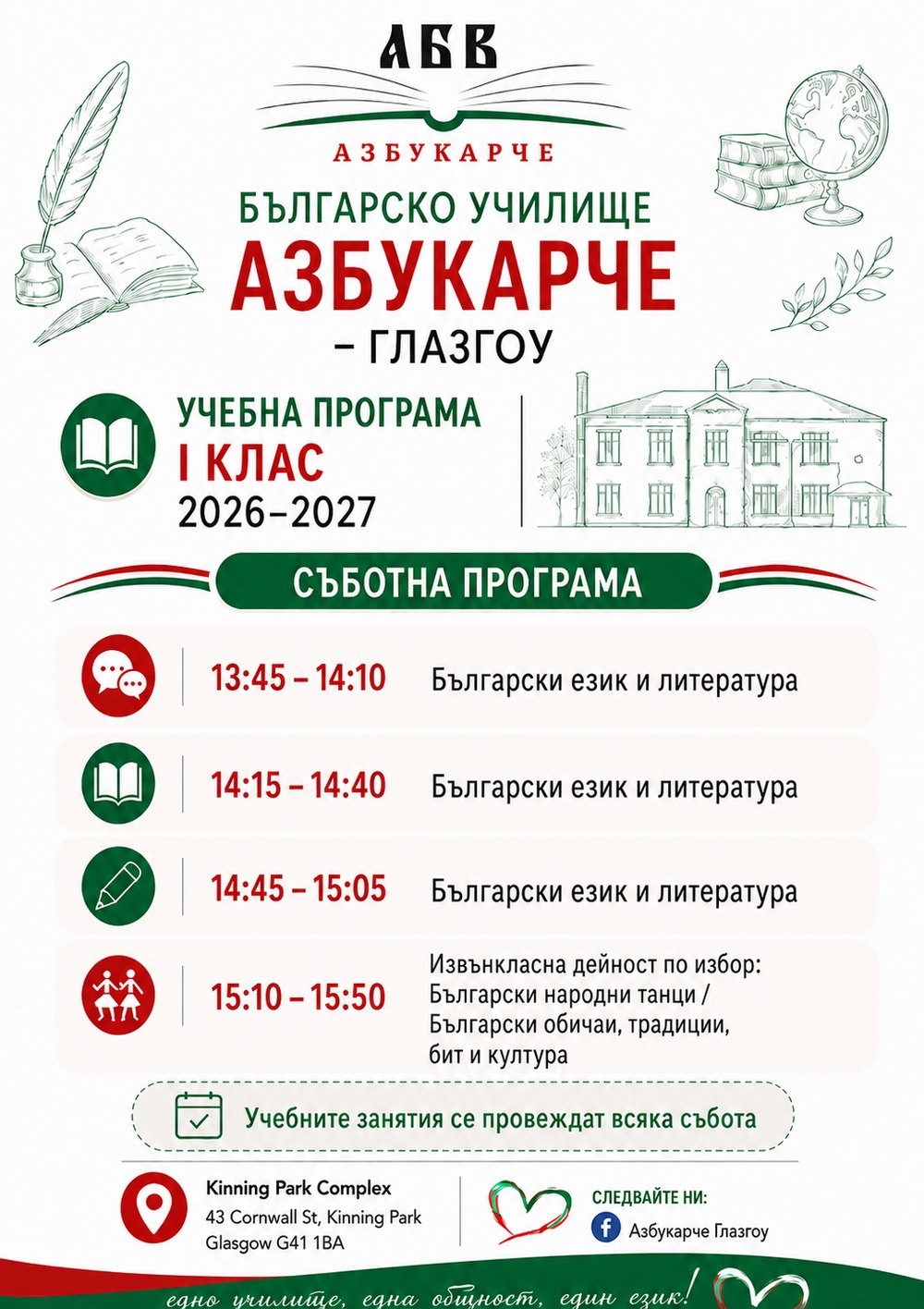
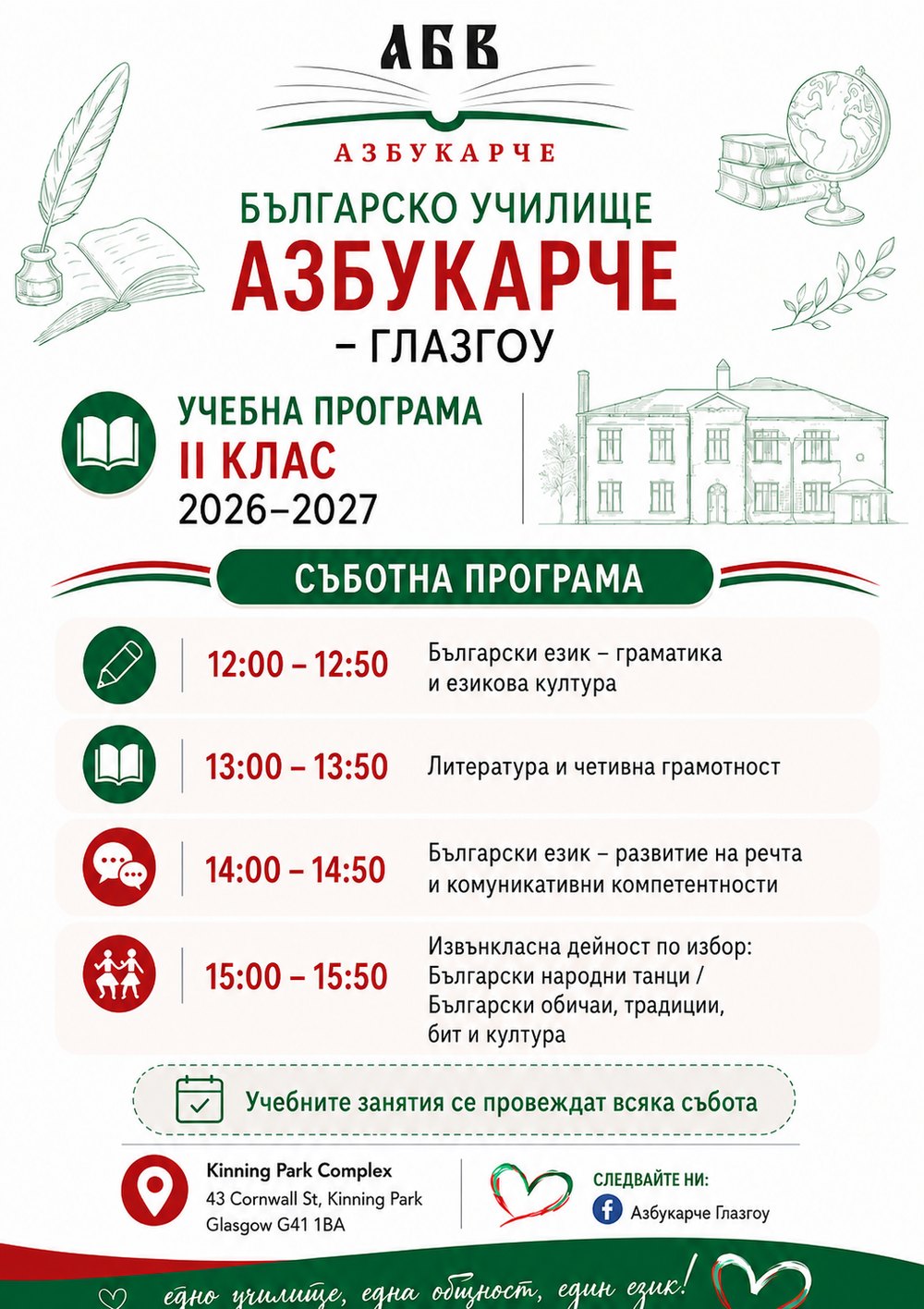
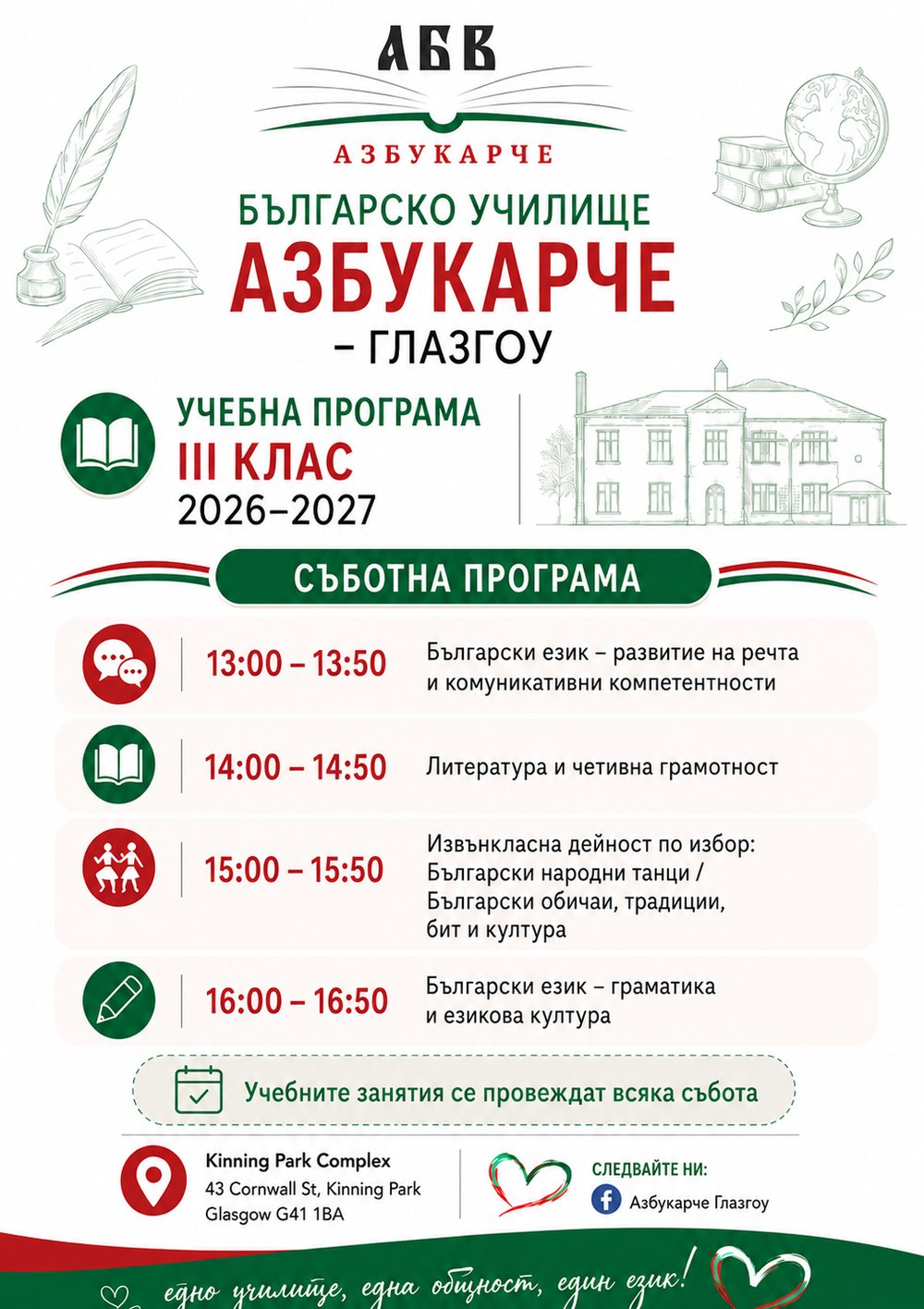
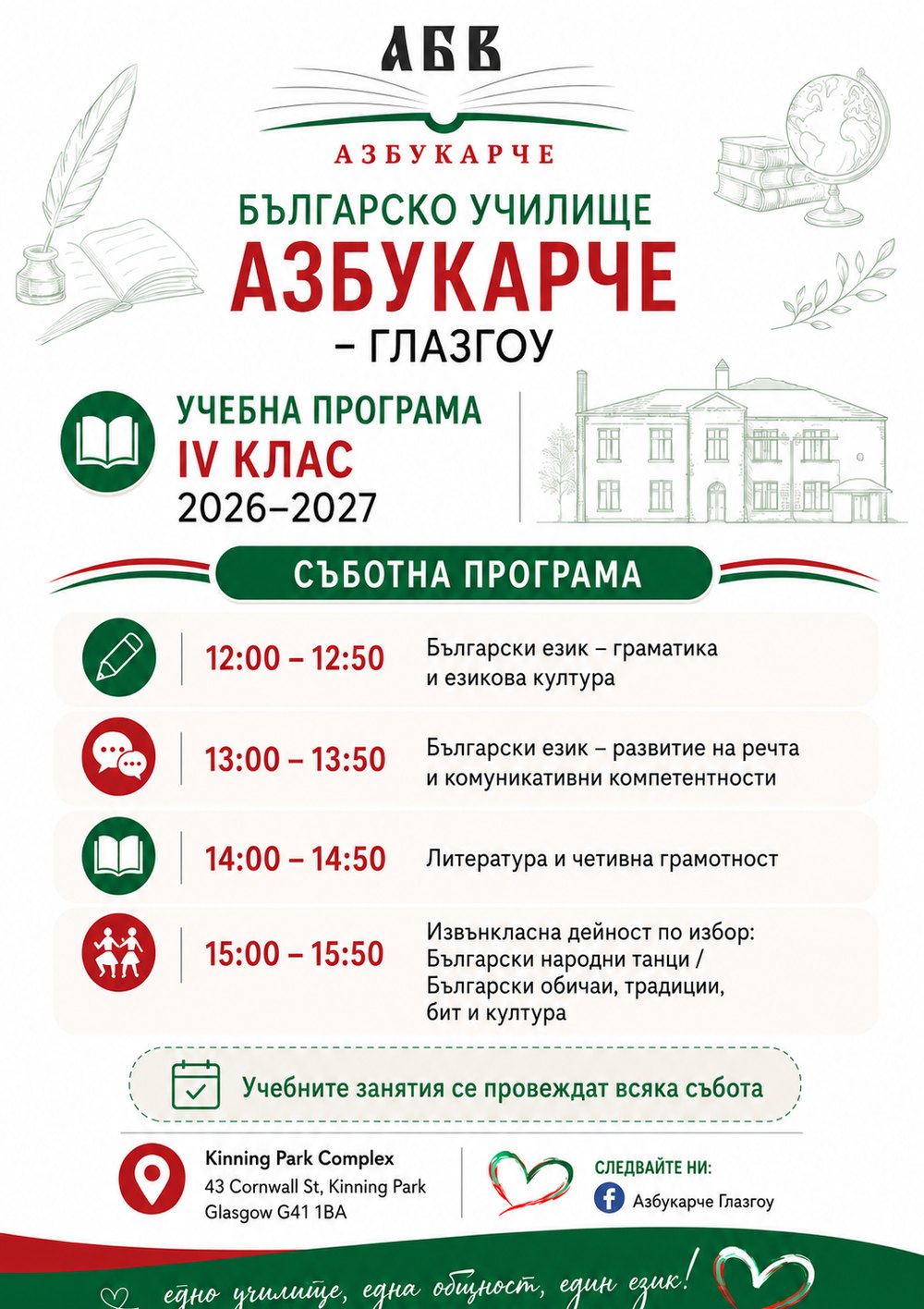
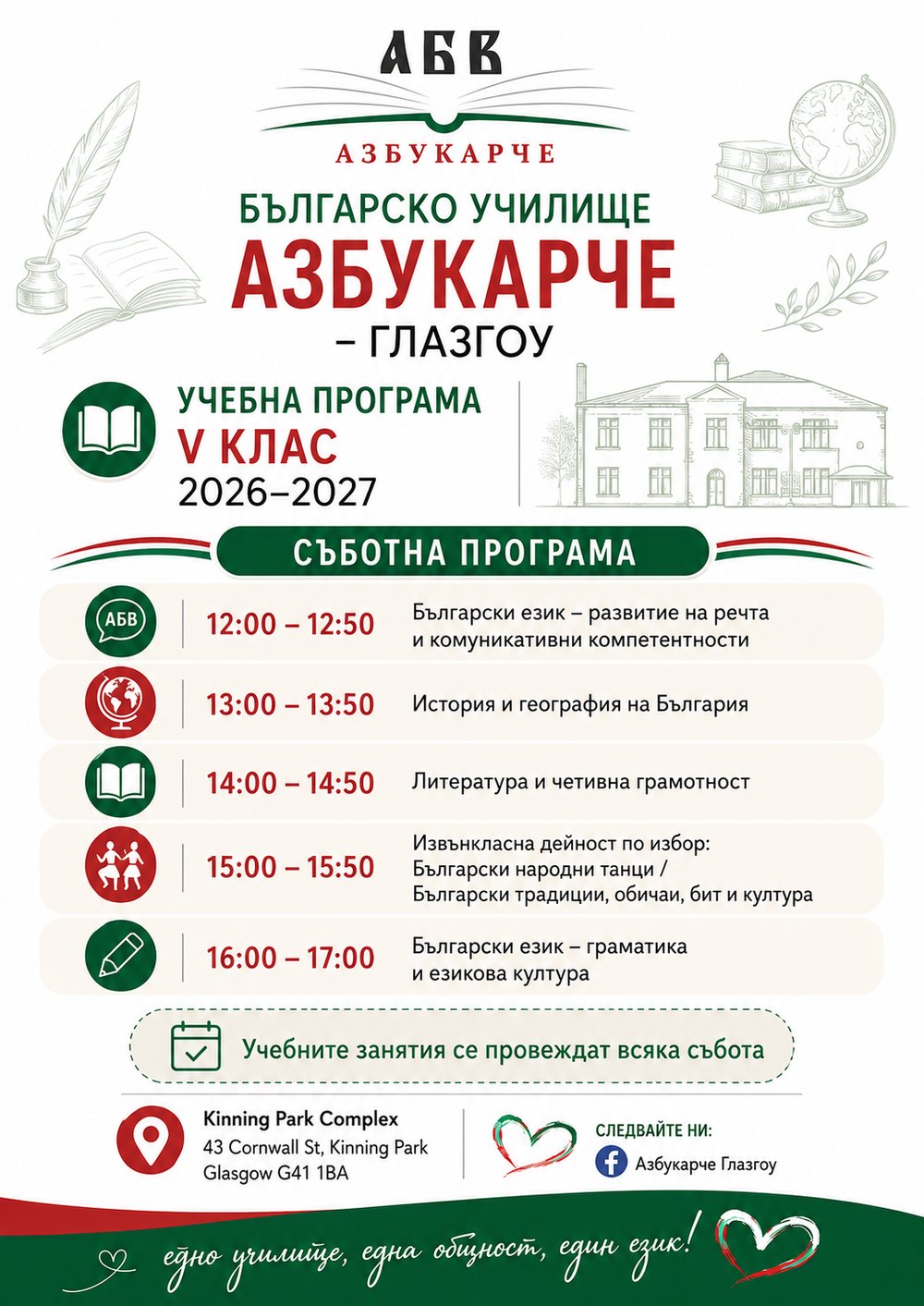
Lessons take place every Saturday at Kinning Park Complex, 43 Cornwall Street, Glasgow G41 1BA.
Online learning
Bulgarian, wherever you live
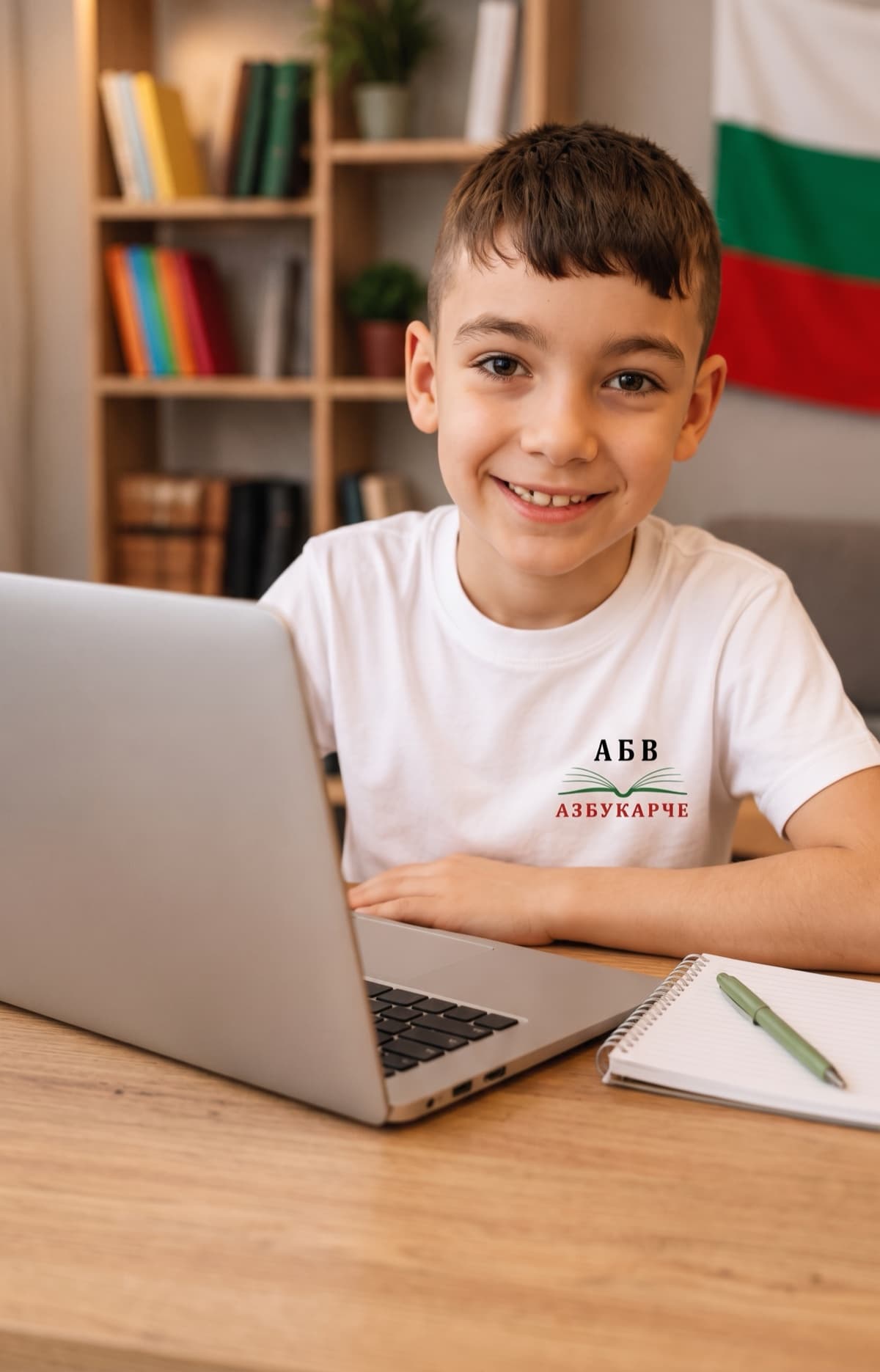
For families who live outside Glasgow, or who cannot come to our lessons in person, we offer online lessons in Bulgarian language and literature.
Pupils are placed in small groups of a similar age and level of Bulgarian.
In lessons we develop speaking, reading, writing and comprehension through conversation, exercises, texts and tasks adapted for the online classroom.
Online learning lets children from all over Scotland and the UK study Bulgarian regularly, without distance getting in the way.

Traditions, dance and culture
Extracurricular activities
Learning at Azbukarche continues beyond the school subjects. Through our extracurricular activities, children discover Bulgarian traditions, folklore and culture in a natural, engaging way.
Pupils can choose classes in “Bulgarian folk dance” and “Bulgaria – traditions, customs, everyday life and culture”.
Through dance, music, creative work, festivals and themed activities, children encounter Bulgarian customs and cultural heritage — and find one more way to experience what is Bulgarian, together.
A school recognised by the Ministry of Education
Azbukarche Bulgarian School – Glasgow appears on the Bulgarian Ministry of Education and Science’s list of Bulgarian Sunday schools abroad under Decree of the Council of Ministers No. 90 (ПМС №90).
Our teaching follows the curricula approved by the Ministry under Decree No. 90, and pupils receive the corresponding certificates for the studies they have completed.
Our approach
We want children to carry Bulgarian with them
We believe children learn best where they feel calm, understood and encouraged.
That is why success, for us, is not only a matter of grammar rules learned or texts read. It is also the moment a child begins to choose Bulgarian for themselves. When they finish their first book. When they tell their grandmother how their day went. When they recognise a Bulgarian song, festival or historical figure and feel that it is part of their story too.
We want our children not simply to know Bulgarian. We want them to use it, to love it and to carry it with them wherever life takes them.